StudSheet Trades
Your trade. A real job.
Pick your trade and see how StudSheet works from the tape measure to the deposit paid: material counts with the math shown, priced from your price book, signed by the client on their phone.
Trades · 01Sketch to paid, one job per trade
Sketch to paid, one job per trade
Trades · 02Every trade
Every trade
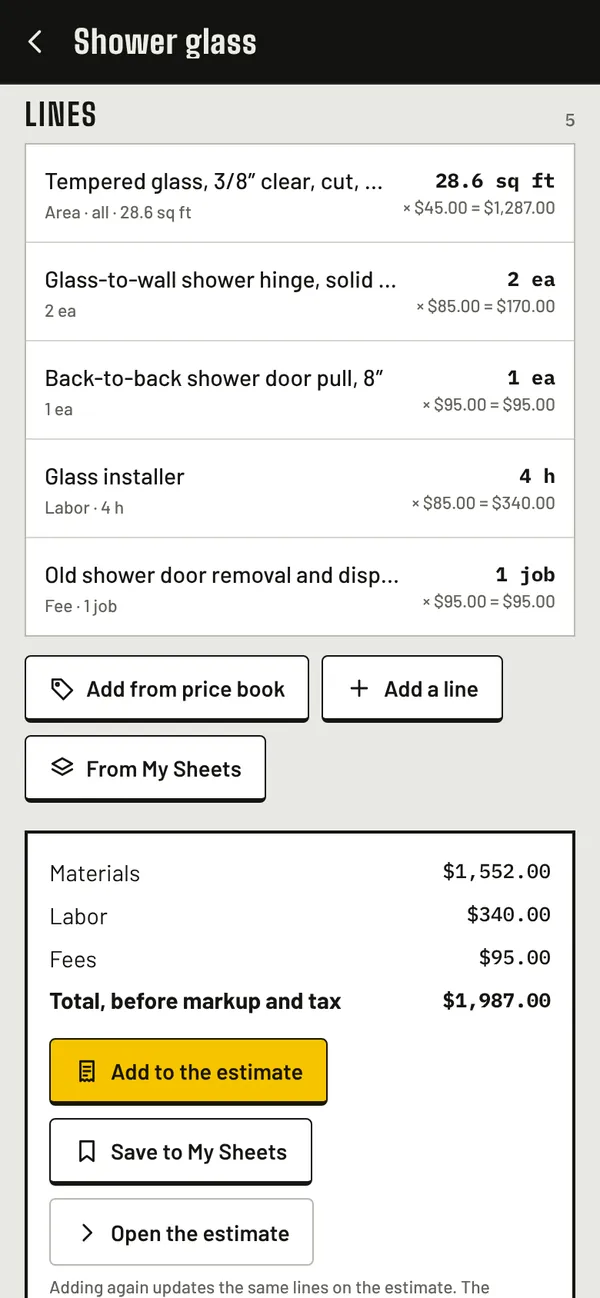
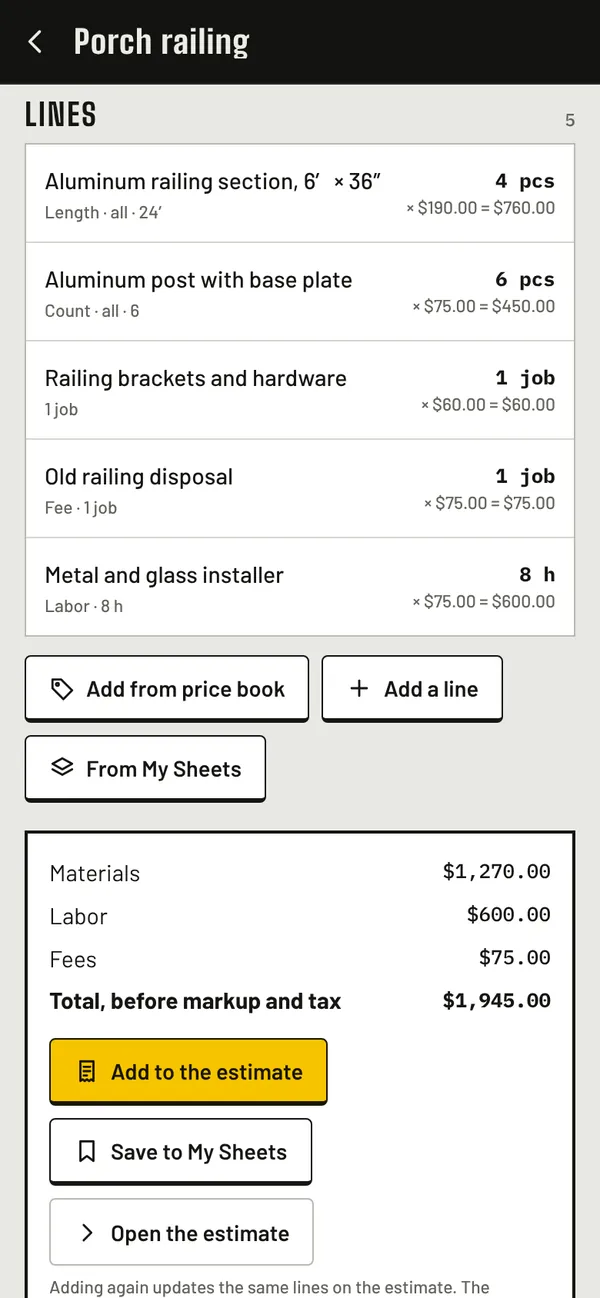
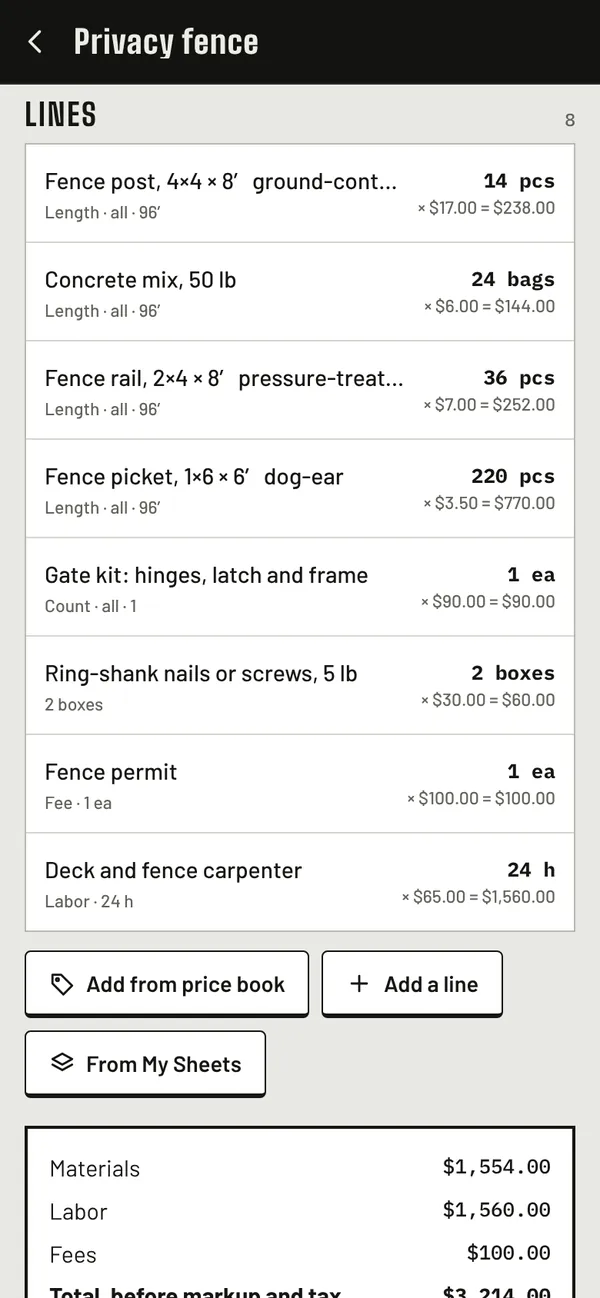
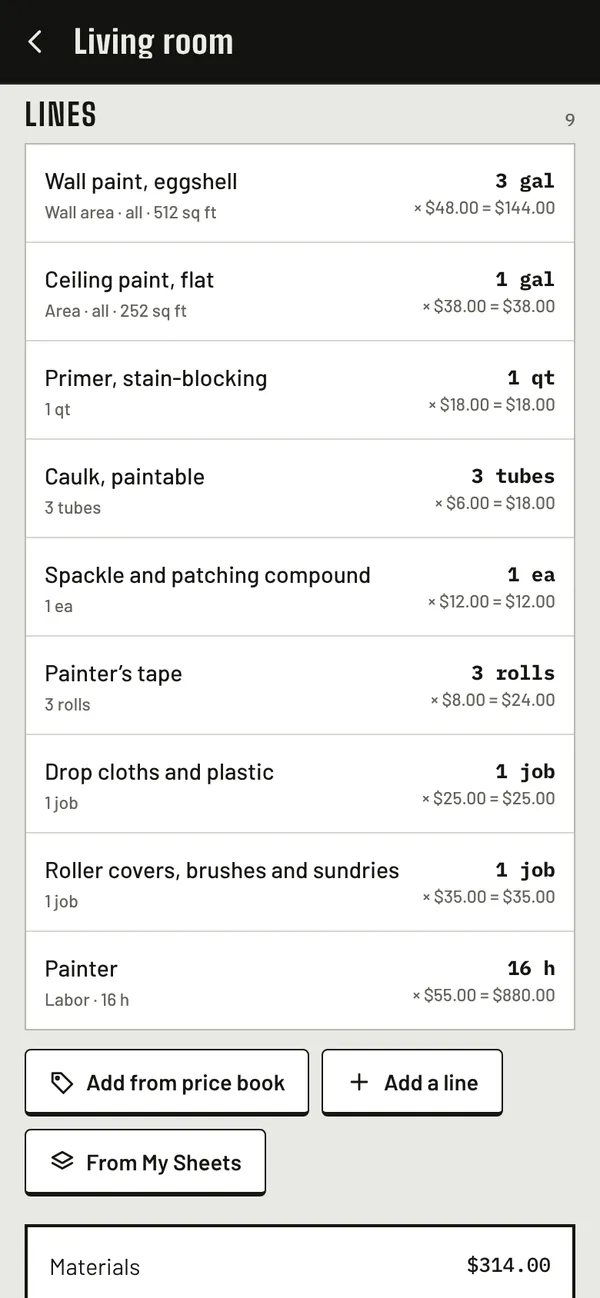
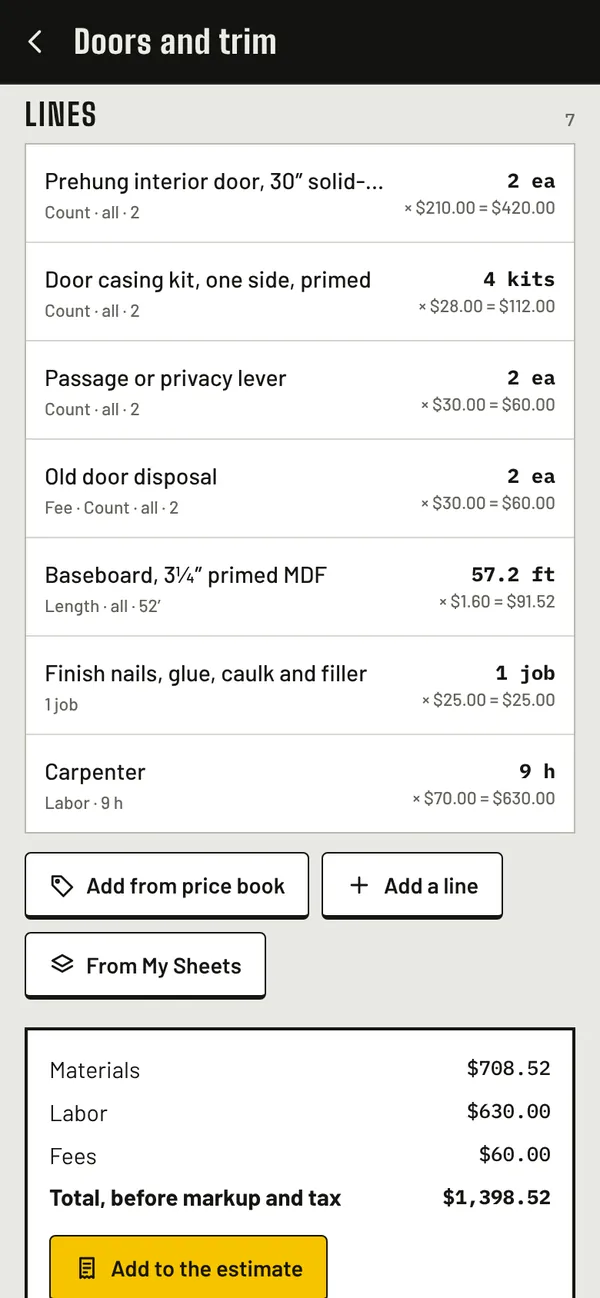
Each trade page has its Sheets, a worked example with the app’s own numbers, and what the estimate looks like.
- Carpentry and framing: interior walls, inside stairs, deck stairs, interior doors, baseboard and trim, closet shelving and sheds.
- Drywall: hanging and finishing and patches.
- Flooring: vinyl plank, hardwood and laminate, carpet and stair carpet.
- Tile: floors, showers and tub surrounds and backsplashes.
- Decks and fences: decks, fences, railings, deck stairs and stain.
- Iron and metal railings: porch, stair and balcony railings and steel or spiral stairs.
- Glass: frameless shower doors, glass railings and mirrors, sketched and priced.
- Painting: rooms, house exteriors, kitchen cabinets and deck and fence stain.
- Concrete: slabs and footings and concrete steps.
- Landscaping and hardscaping: paver patios, retaining walls and raised garden beds.
- Roofing, siding and gutters: shingle roofs, siding and gutters.
- Electrical: circuits and panel upgrades.
- Plumbing: rough-ins, water heaters, toilets, vanities and faucets.
- HVAC: heating and cooling sizing and service plans.
- Remodeling and additions: basements, additions, kitchens and baths.
- Handyman: doors, trim, drywall patches, TV mounts, caulking and shelves.
Trades · 03The same four steps on every job
The same four steps on every job
- The sketch. Type what you measured, or draw it: areas, runs and counts, every side with its size.
- The price sheet. Lines from your price book; each takes its quantity off the sketch, so the price follows the sizes.
- The estimate. Your markup, labor and the job site’s sales tax, with what’s included and what isn’t. The client signs on your phone or their link.
- Paid. A deposit invoice from the signed estimate; Zelle, check or cash recorded in two taps, or card on the client’s link.
Get the Sheet.
Open StudSheet
Coming soon on theApp StoreComing soon onGoogle Play