Small jobs, priced on the spot.
Two new doors and new baseboard, start to finish: the count and the length off the tape, priced from your book, signed on your phone and a deposit paid. An example job with the app’s own math.
Two doors and new baseboard, start to finish
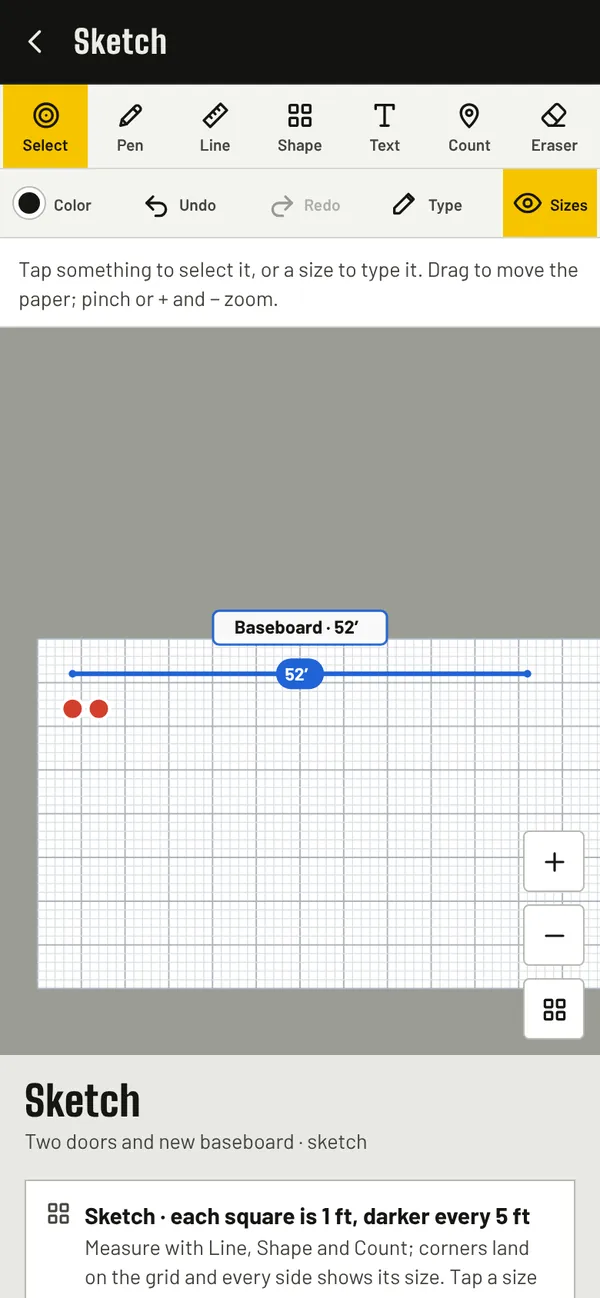
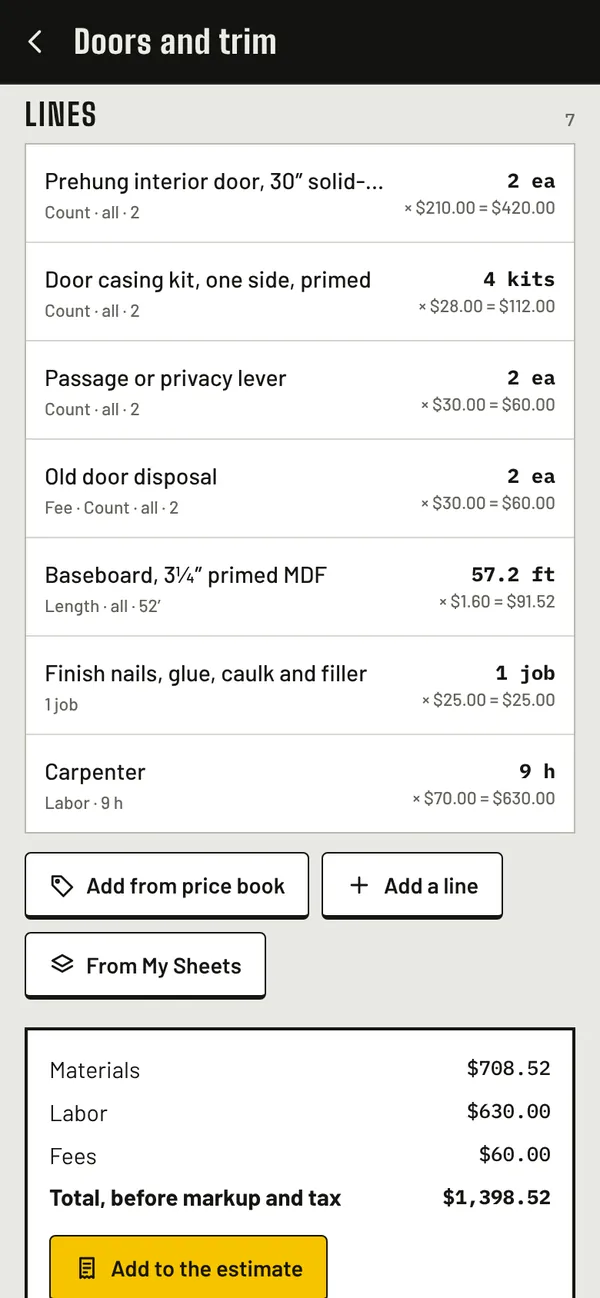
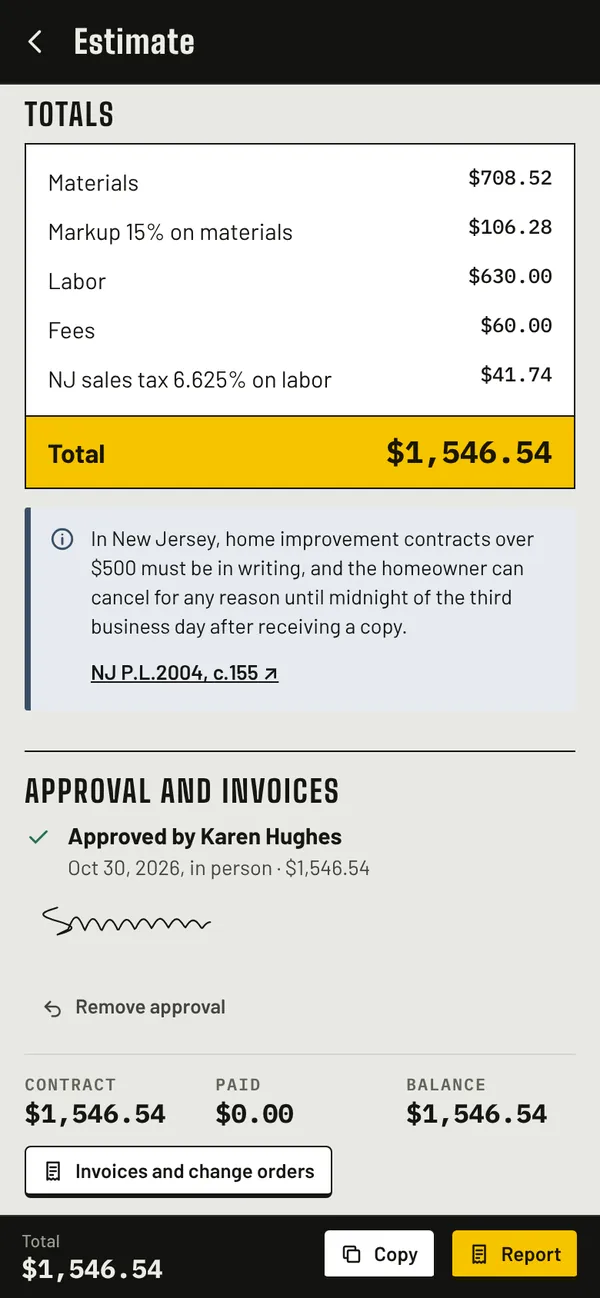
An example job for a made-up client, Karen Hughes: two interior doors swapped for prehung ones, and 52′ of new baseboard. Every quantity and total below is what StudSheet worked out; the prices are the app’s typical US prices, the ones a new price book starts with.
StudSheet vs a notebook and a spreadsheet
| A notebook and a spreadsheet | StudSheet | |
|---|---|---|
| The visit | Notes on the pad, the price sent that night | Sizes, price and signature before you leave the driveway |
| Many small items | Easy to forget one | Picked from your price book, each with its quantity off the sketch or typed |
| The price | Your rates, if you remember them | Your price book, with labor by the hour and a markup on materials |
| What’s not included | Often left out | A list the client signs with the price |
| Getting paid | A check in the mail, maybe | Zelle, check or cash recorded in two taps, or card on their link |
| What it costs | A notebook and a spreadsheet you already have | $49 a month after 14 days free |
| No signal | Always works | The web app needs a connection to open; the phone apps are coming |
What’s in it for handymen
- Ready-made Sheets for small jobs. Baseboard and trim, an interior wall, closet shelving, re-caulking a tub or shower, mounting a TV, a room repaint: type the size, get the parts and the steps.
- A sketch for the rest. Lengths, areas and counts on one page, with your price book lines reading them.
- A price book that starts filled. Prehung doors, casing, levers, baseboard, trim supplies, shims and carpenter hours for carpentry; switch on more trades for more items, or import your own list as a CSV.
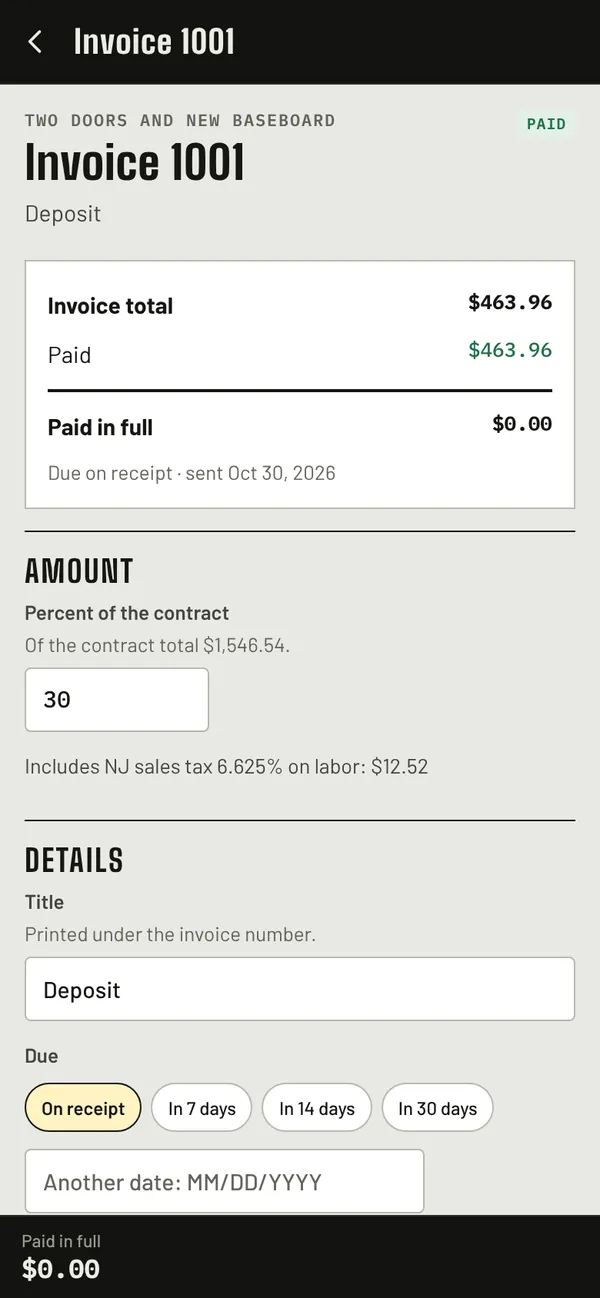
- Several small jobs, one visit. Add lines from different trades to the same estimate, and invoice it whole or as a deposit.
- Paid before you leave. The client signs on your phone; you record Zelle, check or cash in two taps, or, with an account, they pay by card on their link into your own Stripe account. StudSheet takes no fee.
Questions
How do I write a handyman estimate?
List each task with its materials and your time, add your markup on materials and the sales tax your state charges, and get it signed before you start. In StudSheet, each line comes from your price book with its quantity off the sketch or typed, and the estimate adds the markup and tax.
Is there a handyman invoice app that takes Zelle?
StudSheet records Zelle, check, cash and bank payments on the invoice in two taps, so the balance is always right. Clients can also pay by card on their link, into your own Stripe account, with no StudSheet fee.
How much should a handyman charge per hour?
That depends on your area and trade. The price book starts with typical US rates (a carpenter at $70 an hour in the example) for you to change to yours; the estimate then uses your rate.
Can I give an estimate on the spot?
Yes. The example went from the sizes to a signed estimate and a paid deposit on one phone. The web app works in any phone’s browser today; the iPhone and Android apps are coming.
What if the client wants a change halfway through?
Make a change order from the job: price the extra work, get it signed on your phone or their link, and it joins the contract and the balance.