A 6-foot privacy fence, start to finish
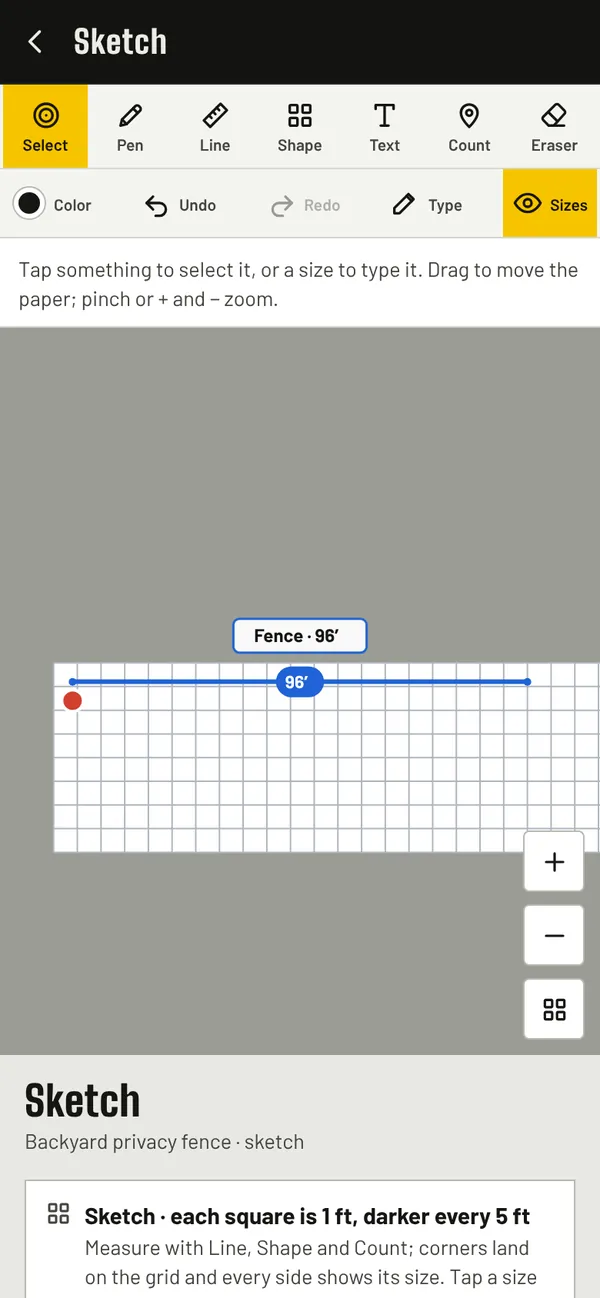
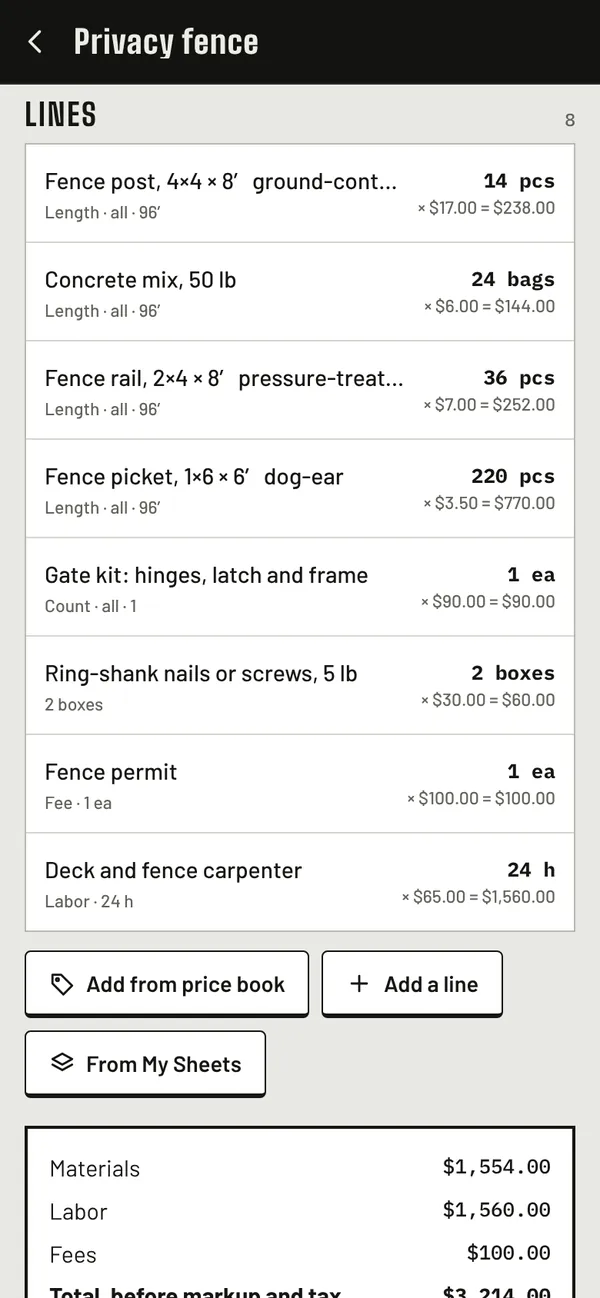
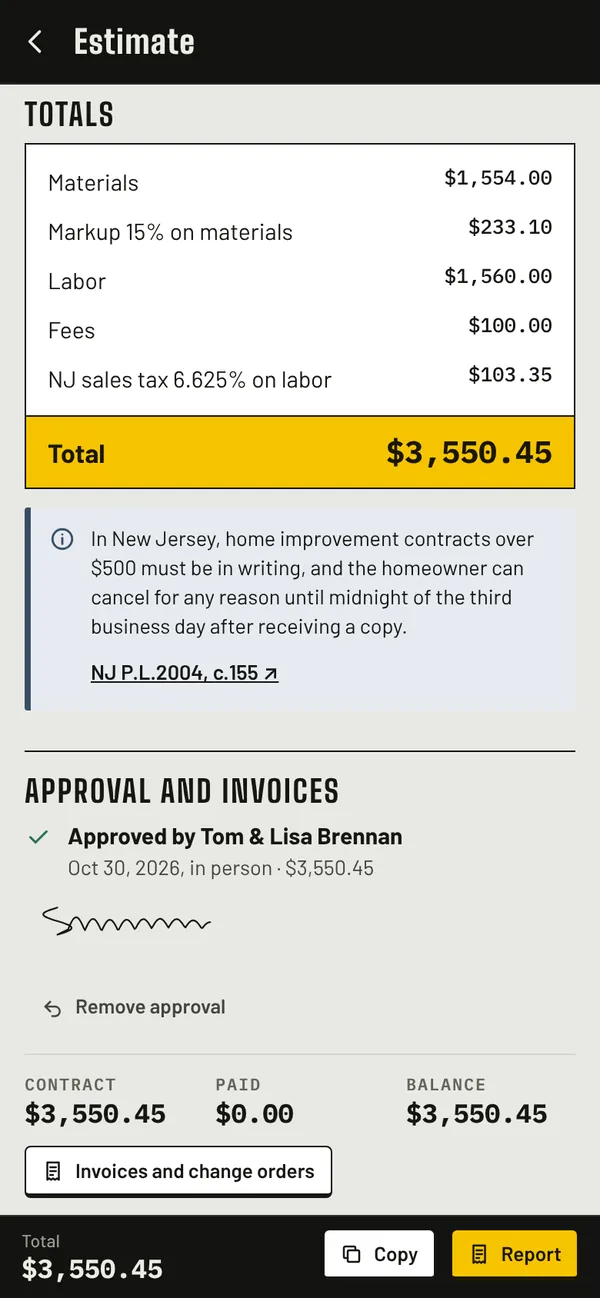
An example job for made-up clients, Tom and Lisa Brennan: 96′ of 6′ wood privacy fence with one gate. Every quantity and total below is what StudSheet worked out; the prices are the app’s typical US prices, the ones a new price book starts with.
StudSheet vs a notebook and a spreadsheet
| A notebook and a spreadsheet | StudSheet | |
|---|---|---|
| The layout | A sketch on the pad, lengths added by hand | The runs and gates on a sketch with every length on it |
| Posts, rails and pickets | Divided out on a calculator, waste guessed | Each line divides the run by what one piece covers, plus your waste, rounded up |
| A change on site | Redo the math | Change a length; every line and the total follow |
| The price | Your rates, if the sheet is up to date | Your price book, with the permit and the labor on their own lines |
| What’s not included | Often left out | A list the client signs with the price; for a fence: survey, 811 locating, old fence removal, rock |
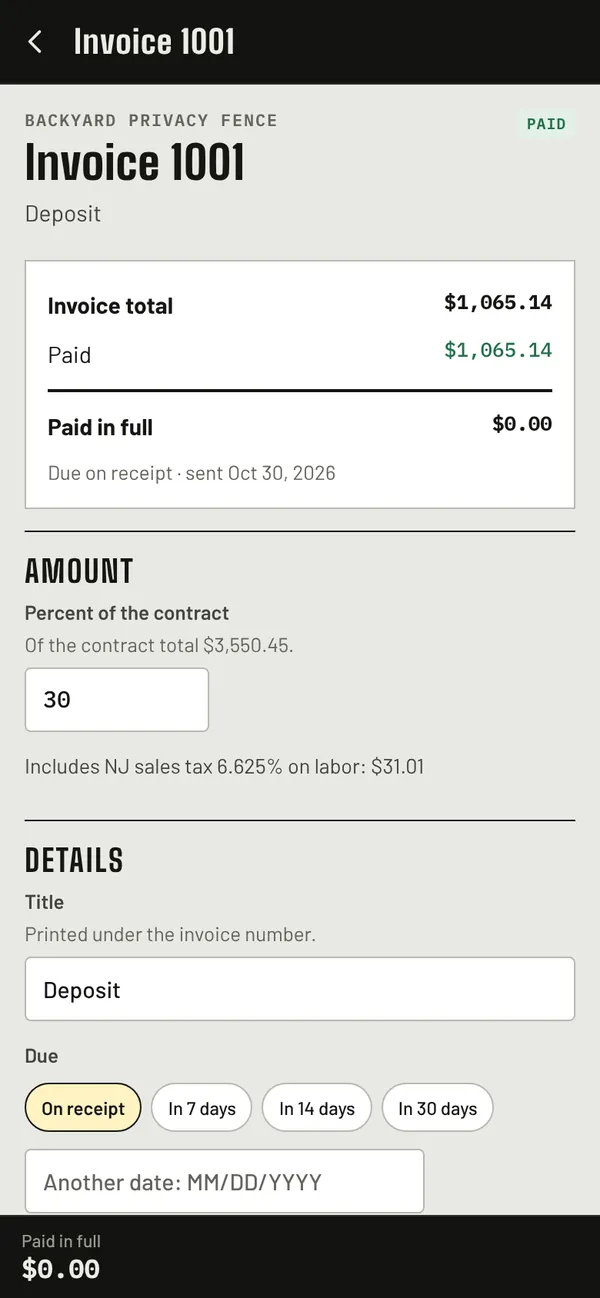
| The signature and deposit | Printed, signed, a check in the mail | Signed on your phone or their link; check, Zelle or card recorded on the job |
| What it costs | A notebook and a spreadsheet you already have | $49 a month after 14 days free |
| No signal | Always works | The web app needs a connection to open; the phone apps are coming |
What’s in it for decks and fences
- Ready-made Sheets. Deck or balcony, fence, railings and guards, deck stairs, deck and fence stain, concrete footings and pavers: type the size and the Sheet draws it and counts every piece, with the math and the code notes for your state.
- A sketch for everything else. An L-shaped yard, a fence with three gates, a deck with a step-down: type each run or area, mark gates and posts, then price it.
- Lines that count by the piece. A post every 8 ft, a picket every 5½″, three rails a section, two bags a post: set what one piece covers and your waste once, save it to My Sheets, and the next job measures its own sketch.
- A price book that starts filled. Posts, concrete, rails, pickets, gate kits, fasteners, joists, decking, hangers, ledger, footing tubes and permits at typical US prices, to change to yours.
- Lists for outdoor work. On a job with the fence Sheet, the estimate suggests included: posts set in concrete as listed, gates as listed; not included: survey or property-line marking, utility locating (call 811), removing the old fence, rock or root removal.
Questions
How do you calculate how many fence pickets you need?
Divide the fence length by the picket’s width plus any gap, then add a little for waste and cuts. In the example: 96′ ÷ 0.46′ (a 5½″ picket, no gap) = 209, plus 5% = 220. In StudSheet you set “one picket covers 0.46 ft” once and every fence measures itself.
How many posts for a 96-foot fence?
At 8 ft on center, a straight 96′ run is 12 bays and 13 posts, plus one for each gate side and corner. The example rounds 96 ÷ 8 + 10% up to 14; set your own spacing and waste.
Is there a fence estimate template?
Yes. Price one fence the way you build it, save it to My Sheets, and start the next one from it: the lines keep their math and measure the new sketch. The ready-made fence Sheet is there too.
How do I write a deck estimate?
Start from the deck Sheet: type the size and it counts footings, posts, beams, joists, hangers, decking and fasteners with the math shown. Your price book prices it, the estimate adds markup, labor and tax, and the client signs it.
What should a fence estimate say isn’t included?
Usually the survey or property-line marking, utility locating (811), removing the old fence, and rock or roots. StudSheet suggests these for fence jobs and the client signs them with the price.